Hotline
+48 32 445 30 80
Service 24/7
+48 32 445 30 89

Industrial ventilation systems are a crucial aspect, particularly when dealing with frequent exceedances of permissible concentration levels. Despite the heavy load on industrial ventilation, it must continue to fulfill its purpose. This is to ensure the safety of employees and prevent premature wear of production machinery due to dust clogging. NAAR Technik provides a customized approach to meet your specific needs, which is essential when selecting ventilation systems for industrial halls. With extensive experience in industrial ventilation system implementation, NAAR Technik excels in identifying the most cost-effective solutions that comply with all requirements and directives. Undoubtedly, they are a specialized company in their field.
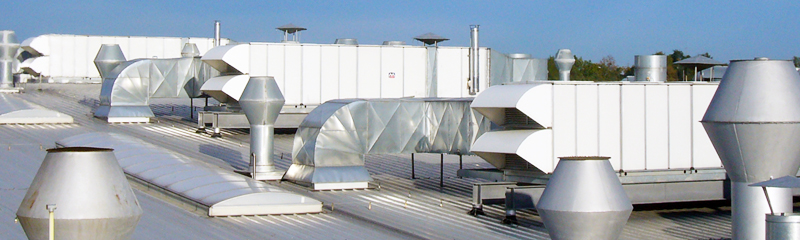
Industrial ventilation in manufacturing facilities often faces challenges such as exceeding the highest permissible concentrations, high levels of dust, emission of toxic or chemically aggressive vapors and gases, heat gains, explosion hazards, or specific hygiene requirements. Industrial ventilation, unlike standard comfort ventilation, requires an individual approach tailored to the needs and characteristics of the production process, as well as extensive experience in industrial applications. Through years of experience and successful implementation of ventilation systems in various production and warehouse environments, NAAR Technik has developed the most cost-effective solutions based on specific applications.
Zone ventilation is particularly suitable for manufacturing halls with a high risk of exceeding the highest permissible concentrations (NDS). Custom-designed ventilation based on specific needs allows for rapid hazard elimination. Zone ventilation systems work effectively when only certain areas, such as welding or painting zones, are exposed to significant pollution. Instead of ventilating the entire facility, these systems focus on specific areas. Additionally, zone ventilation can be combined with local ventilation, enhancing its efficiency when there is a constant and significant emission of pollutants.
Local ventilation systems help limit or completely prevent the spread of pollutants throughout the entire production hall. By implementing localized exhaust systems at workstations, such as those used by welders (where some particles may be toxic), the risk of inhaling pollutants and developing respiratory diseases is minimized. The use of local ventilation is driven by both economic and health factors.
This refers to mechanical supply and exhaust ventilation with heat recovery. Ventilation has always posed the challenge of lowering the temperature in the premises. However, with the application of air recuperation, the “used” air is replaced with fresh air while recovering approximately 90% of the heat from the “used” air. The entire process is controlled by a controller. Moreover, the recovered warm air from certain industrial processes can be utilized to heat other areas within the company, such as offices or break rooms.